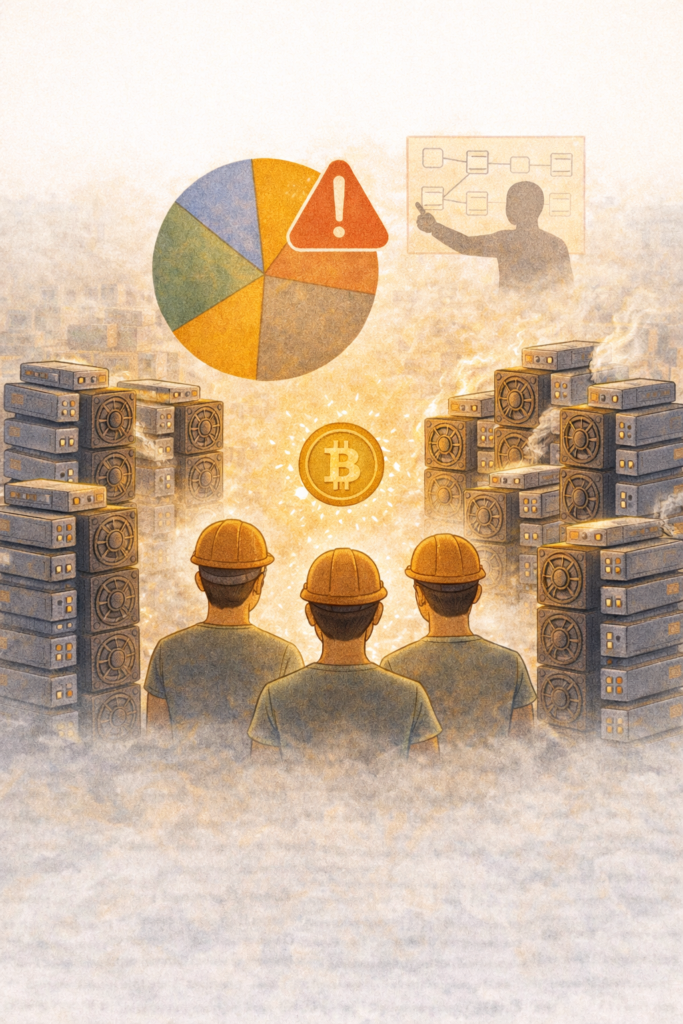
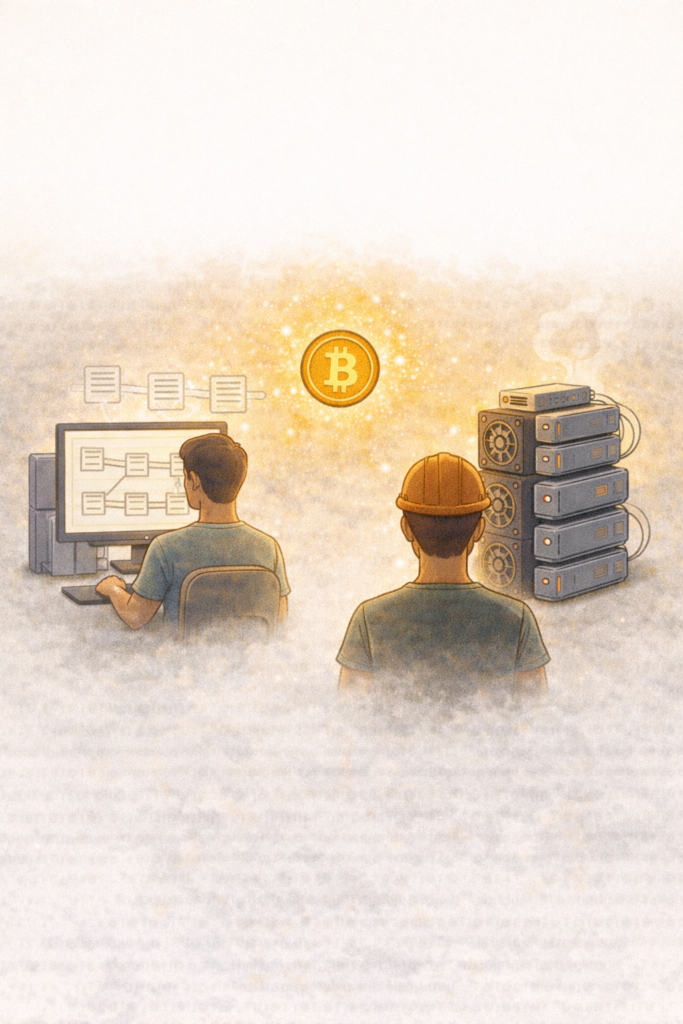
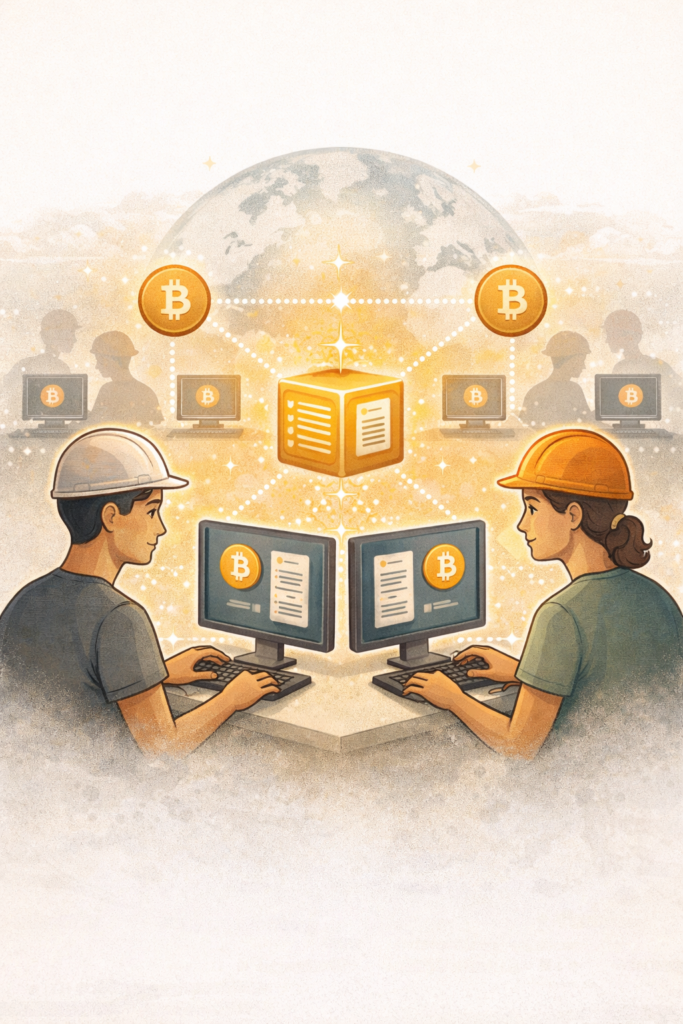
The Bitcoin network runs because many independent people choose to follow the same rules. There is no central office. There is no single owner. Instead, different groups do different jobs.
Users send payments. Nodes check rules. Miners build blocks. Developers write software. Exchanges and wallets help people use the system. None of these groups controls everything alone.
Who keeps it running
The Bitcoin network stays alive because people have reasons to participate. Miners want rewards. Node operators want to verify the system for themselves. Users want money they can send without asking a company first.
These motives are not identical. However, they can still point in the same direction. Everyone benefits when the rules remain clear and trusted.
Why incentives matter
Bitcoin does not depend on everyone being kind. It uses incentives. Honest miners can earn rewards. Dishonest miners risk wasting money. Nodes can reject invalid blocks.
That mix makes the Bitcoin network hard to control. Influence exists, but it is spread across many roles.
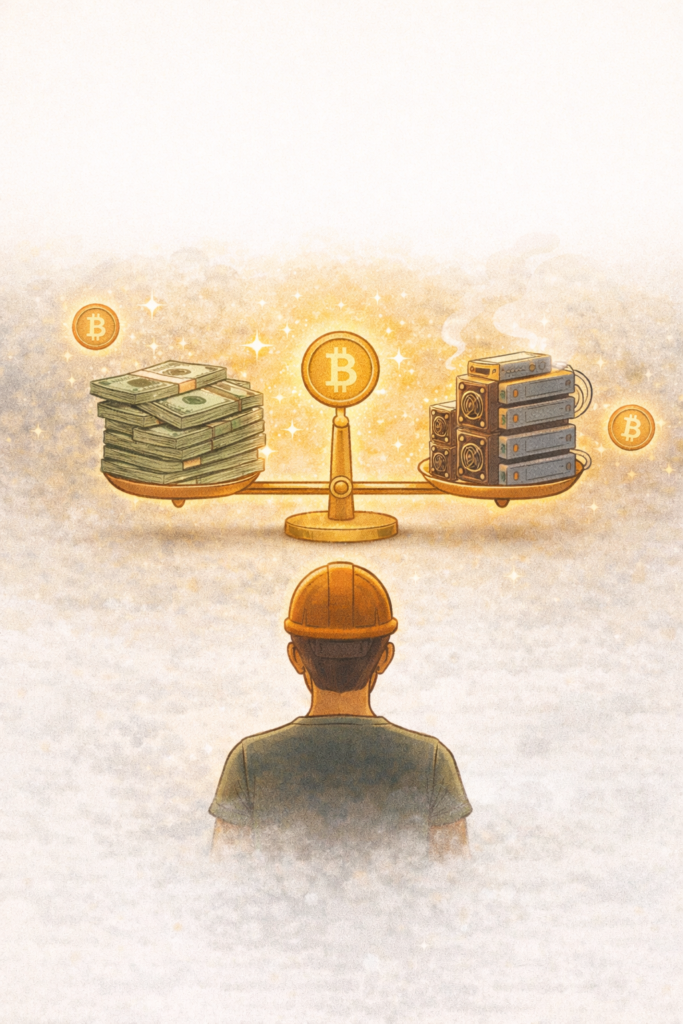
Bitcoin mining costs real money because miners buy machines, electricity, and time to compete for rewards. This connects directly to proof of work and the Bitcoin.org explanation.
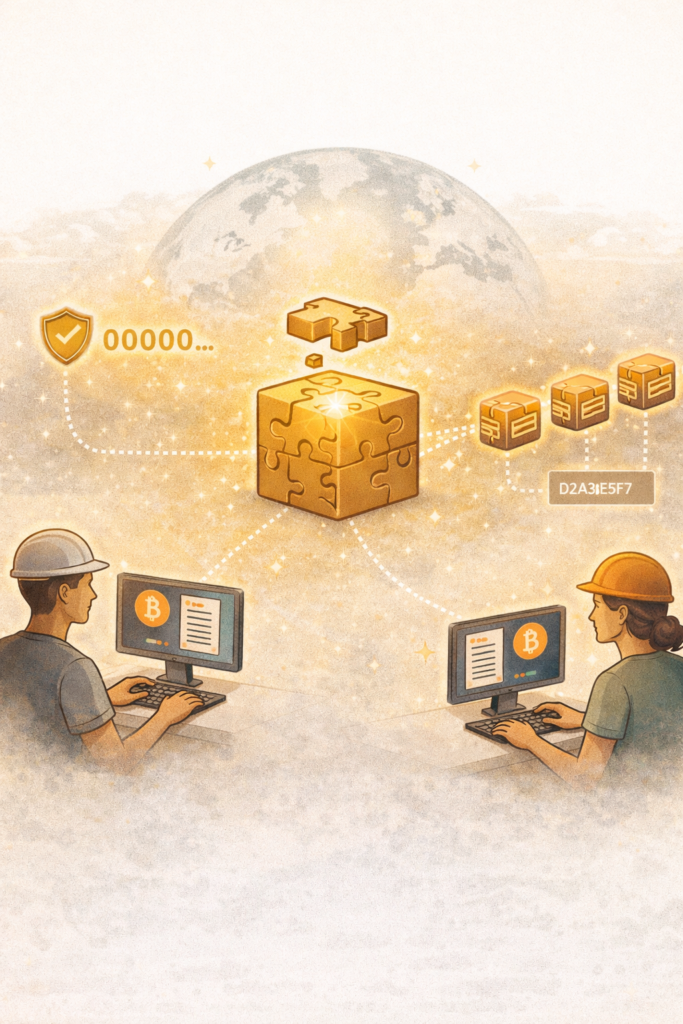
And we have now stumbled across the clever incentive structure at the heart of Bitcoin. As we learned, transactions are verified globally by a network, then added in blocks and appended to the blockchain through a competitive computational puzzle that requires extensive resources (in the form of specialized hardware, constant electricity, and some degree of patience) to solve. It doesn’t take a genius to realize that this leads to an obvious question. Who in their right mind would want to donate these real world resources (time, money, and energy) to operate this system?
The answer comes down to the incentive layer:
Why miners pay the cost
Bitcoin is constructed in such a way that participants contributing to the network are financially rewarded for their labor. When a miner successfully solves the computational puzzle and thus publishes their new block of transactions, they receive the reward of freshly created Bitcoins. Added to the reward of newly generated coins, a miner also gets a reward in the form of the transaction fees that their transactions collectively accumulate. These two rewards together motivate miners to expend their computational resources to participate in the system. Without this layer of incentive, it’s hard to imagine someone wanting to waste their resources on a system they don’t own.
The brilliance of this construction is that it makes securing the network an economic activity. Miners are rational, self-interested agents making costs-benefits assessments. They invest in better machines, look for the cheapest source of electricity, and fiercely compete against each other for block rewards because it is the most plausible means to obtain the network’s currency. In doing so, Bitcoin turns security from a technical issue to an economic one. The network’s security relies on the financial interests of the network’s operators, rather than on assumptions about their honest intentions.
To see why this system is so reliable, look at what happens when miners do try to cheat. A miner could include a fraudulent transaction, but once a block is submitted to the network, it will be individually verified by each other node. The block, which violates protocol rules, will be rejected very quickly. The cheated miner ends up wasting their entire computation and electricity expenditure, all for nothing. Miners who follow protocol rules, on the other hand, have a chance to earn rewards. It quickly becomes more economically feasible for miners to behave honestly rather than cheat.
How rewards change behavior
This system ensures the security of the network in yet another way: the larger the amount of computation invested, the more secure the system is. It is exponentially harder to perform enough computation to successfully “fork” the blockchain. This implies that it is far easier for thousands of people running inexpensive, specialized hardware for the benefit of the entire network, rather than for one entity to obtain enough computational power to disrupt the entire network.
Finally, one other fundamental mechanism in Bitcoin to make sure that new Bitcoins are generated at a controlled rate, is its capped supply of new coins. In contrast to traditional currencies where their value is mostly regulated by monetary policy through the creation or destruction of cash (in the form of fiat money) by banks. In Bitcoin, however, new coins enter into circulation as a result of the mining process, and the rewarded number of new Bitcoins is decreased over time,halving itself, and that in turn controls the scarcity and therefore the perceived value.
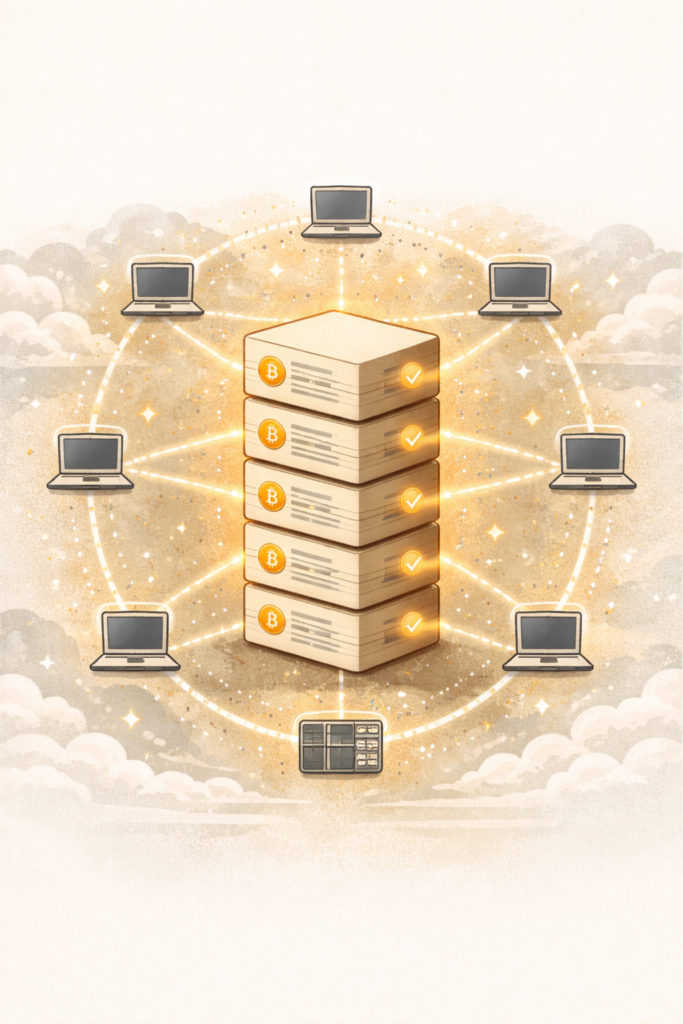
All in all, this entire system appears to be incredibly well balanced. Economic incentives are driving participation in securing the network, and the strict cryptographic rules guarantee the integrity of the transactions in the blocks. The decentralization of thousands of nodes globally contributes to the agreement on the ledger. Because there’s no trust placed in anyone or any organization, and simply placed in mathematical principles and economic incentives, people on Earth are allowed to engage in mutual agreements concerning a shared financial history without ever knowing each other personally.
With the power and expense of mining growing ever so increasingly, we might start wondering if mining might ever centralize, causing the system to be not so decentralized after all.
In our next post we discuss mining evolution, mining pools and how decentralization could survive against competing, ever-improving technologies.
Why this matters
In practice, mining makes attacks expensive. A miner must spend resources before the network accepts a new block.
What to remember
Therefore, mining is not only a lottery. It is an incentive system that rewards honest work and punishes wasted effort.
Simple version
Bitcoin mining is costly by design. Miners spend money first. Then the network rewards valid work. As a result, cheating becomes expensive.
Reader checklist
First, look at the cost. Next, look at the reward. Finally, ask why an honest block is usually the best business decision.
Plain English summary
Bitcoin mining uses energy. That cost is the point. It makes fake history expensive. It also gives honest miners a clear reward.
So, the miner has a simple choice. Follow the rules and earn. Break the rules and waste money.
Bitcoin transactions are verified by rules, not by a bank desk. A wallet creates a payment. The network checks whether that payment is valid. Then miners can place it in a block.
This process may sound technical, but the idea is simple. Every node can check the same facts. That is how Bitcoin keeps trust public.
Who checks the payment
Nodes check Bitcoin transactions first. They ask simple questions. Is the signature valid? Do the coins exist? Were those coins already spent? Does the transaction follow the rules?
If the answer is no, the node rejects the payment. If the answer is yes, the transaction can move forward.
What miners do
Miners collect valid Bitcoin transactions and build blocks. They do not get to invent coins or ignore the rules. Other nodes still check their work.
So, miners organize the payments. Nodes verify the rules. Together, they help the system work without a bank in the middle.
A Bitcoin transaction does not move a coin like a file. Instead, it changes who has the right to spend bitcoin next.
That sounds strange at first. However, it becomes simple if you think of Bitcoin as a public record of ownership.
When you send bitcoin, your wallet creates a signed message. The message says which coins you can spend and where those coins should go next.
What the wallet actually sends
Your wallet does three important things. First, it chooses spendable bitcoin linked to your address. Next, it creates a new instruction. Finally, it signs that instruction with your private key.
The signature proves that the instruction came from someone who controls the right key. It does not reveal the private key itself.
So the network can check your authority without learning your secret. That is one of the clever parts of Bitcoin.
How the network checks it
After the Bitcoin transaction is broadcast, nodes begin checking it. A node asks simple questions.
Is the signature valid?
Do the coins exist?
Were those coins already spent?
Does the transaction follow Bitcoin rules?
If the answer is no, the node rejects the transaction. If the answer is yes, the transaction can move through the network.
Why nothing “travels”
In a bank transfer, people often imagine money moving from one account to another. Bitcoin works differently.
The blockchain records a chain of valid spending rights. A transaction consumes old rights and creates new rights.
Therefore, the coin is not a moving object. It is a history that proves who may spend value next.
What miners add
Miners collect valid transactions and place them into blocks. Then the network checks those blocks too.
Once a block is accepted, the transaction becomes part of the public history. More blocks after it make that history harder to change.
This is why confirmations matter. Each confirmation adds more weight behind the transaction.
A simple takeaway
A Bitcoin transaction is a signed update to public ownership. Your wallet proposes it. Nodes verify it. Miners package it. Then the blockchain records it.
So when you ask where your bitcoin went, the answer is clear. It went into a new spendable record on the blockchain.
That record is public, but control remains private. This balance is what lets Bitcoin work without a bank.
Bitcoin without banks sounds strange at first. We are used to banks checking balances, approving transfers, and keeping private records. Bitcoin changes that model. It lets a public network check payments instead.
When you send bitcoin, you do not move a coin like a file. You create a signed message. That message says which coins you can spend and where they should go next.
What replaces the bank
A bank usually decides whether a payment is valid. Bitcoin uses rules instead. Your wallet signs the transaction. Then nodes check the signature, the coin history, and the rules.
This is why Bitcoin without banks can work. The network does not need to trust your story. It checks the proof.
Why keys matter
Your private key is what gives you control. If your key can sign a valid transaction, the network accepts that you can spend those coins. If you lose the key, nobody can reset it for you.
That freedom is powerful. However, it also adds responsibility. Bitcoin removes the bank from the middle, but it does not remove the need for care.