Category: Governance & Treasury Security

DAOs, multisignature wallets, governance, and safer crypto treasury operations.

  • Day 25 — How Can a Crypto Treasury Avoid One Dangerous Key?

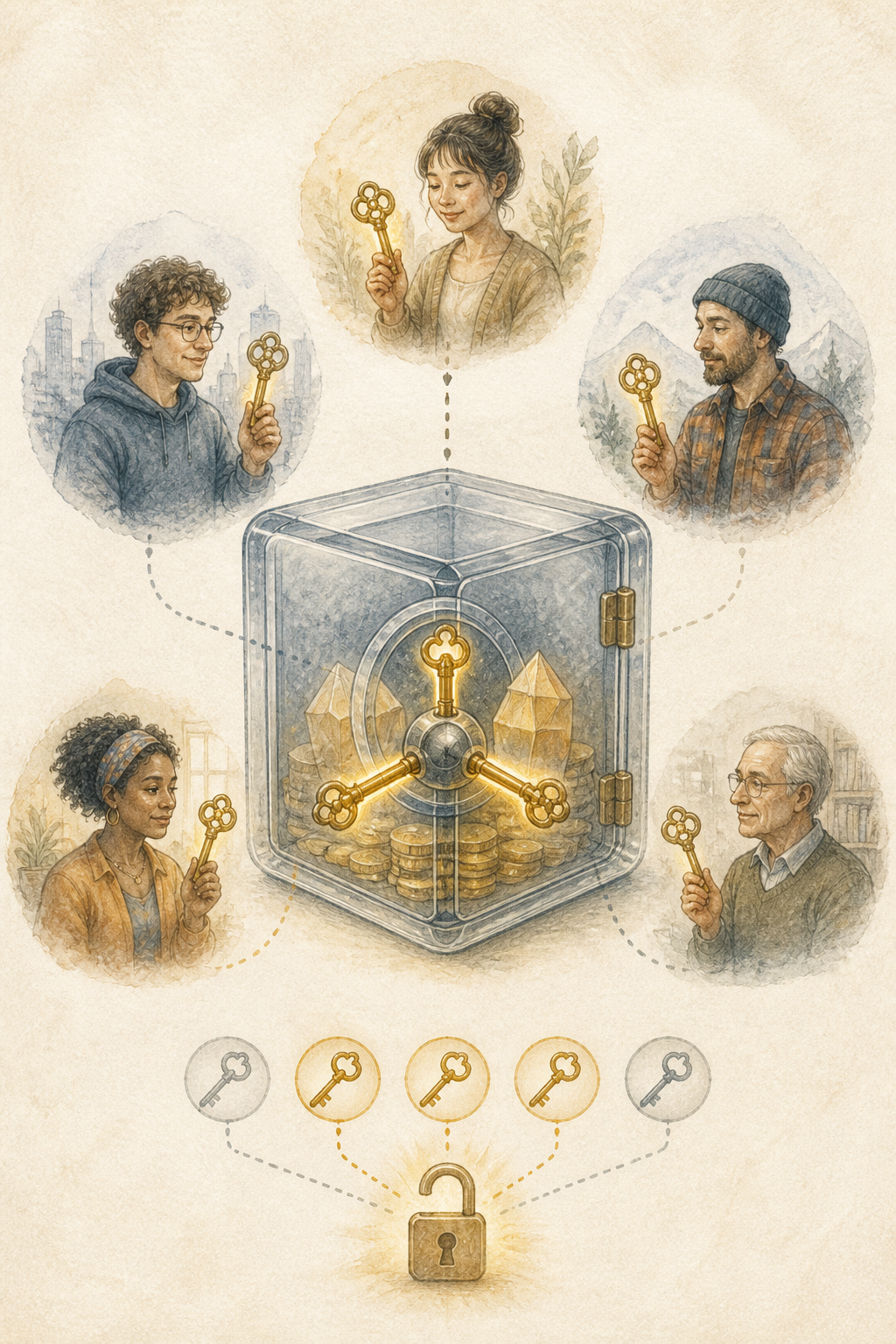
    Watercolor illustration of several trusted signers jointly unlocking a multisignature crypto treasury

    Why a crypto treasury needs shared control

    A crypto treasury can hold serious value. Therefore, one private key should not control everything.

    If that one key is lost, stolen, or used badly, the whole treasury can be at risk.

    This is why teams often use a multisig, also called a multisignature wallet.

    What a multisig does

    A multisig wallet requires more than one approval before funds can move.

    For example, a two-of-three setup has three signers. Any two must approve a transaction.

    As a result, one compromised key is not enough to empty the treasury.

    Why this matters for DAOs

    Many DAOs and crypto teams use treasuries to pay contributors, fund projects, and manage reserves.

    A shared treasury needs clear rules. It also needs signers who understand their responsibility.

    Good treasury security is not only about tools. It is also about process.

    The human side of key management

    Signers should store keys safely. They should also avoid approving transactions they do not understand.

    In addition, teams should decide what happens if a signer leaves, loses access, or becomes inactive.

    The takeaway

    A crypto treasury should avoid depending on one dangerous key.

    A multisig spreads control, reduces single-point failure, and makes treasury decisions easier to review.
  • Day 24 — Can an Online Community Run an Organisation?

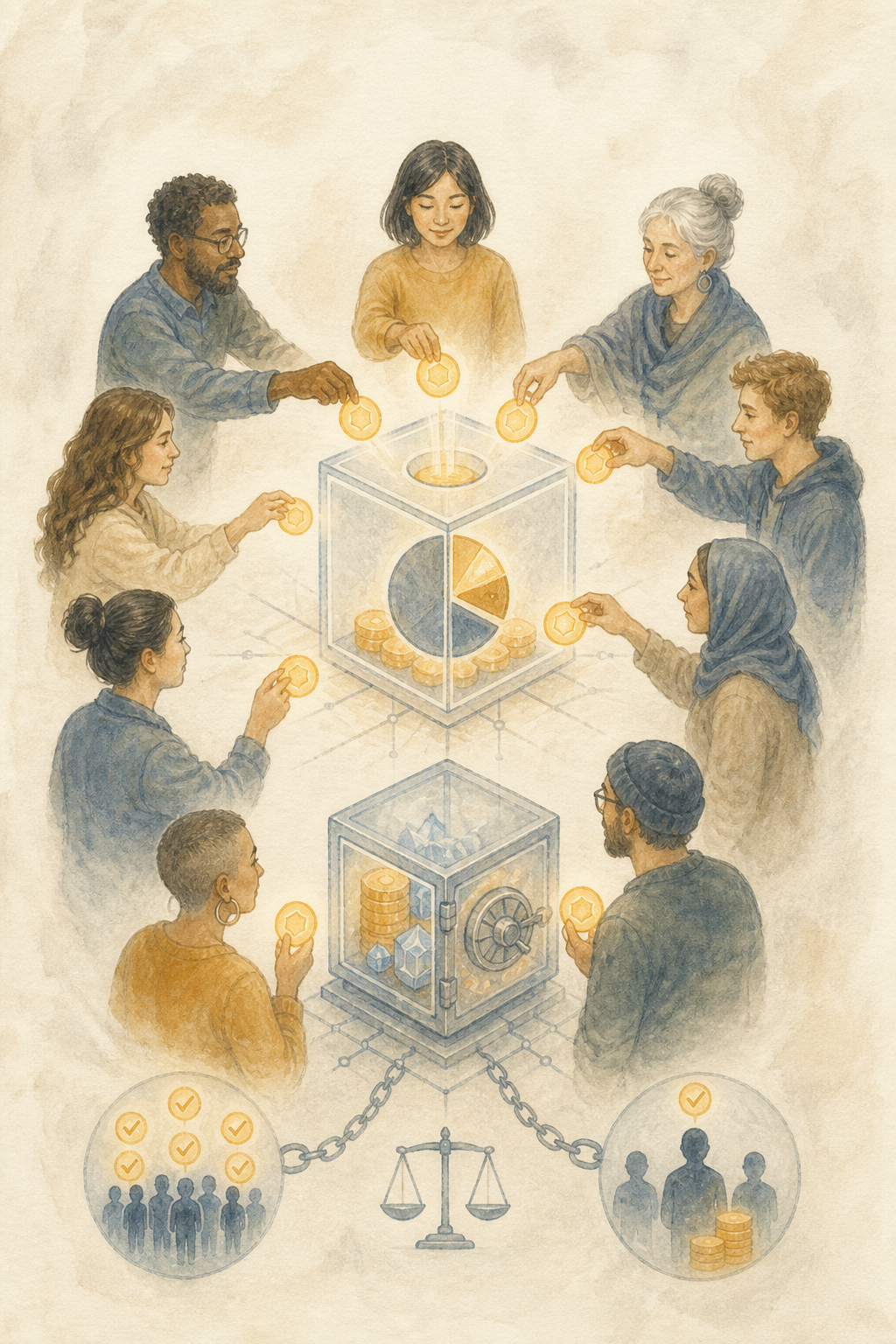
    Watercolor illustration of a DAO community voting on proposals around a shared treasury

    A decentralised autonomous organisation, or DAO, is an attempt to coordinate people and shared resources using blockchain-based rules. Instead of every decision being made by a traditional management hierarchy, members can create proposals, vote, and direct a treasury through smart contracts.

    Many DAOs use governance tokens. A holder may vote on protocol fees, upgrades, grants, or which assets a treasury should hold. Proposals often move through discussion, a formal vote, and then execution. Some systems execute successful votes automatically; others rely on a committee or multisignature wallet.

    The word autonomous can be overstated. Writing proposals, evaluating trade-offs, maintaining software, and negotiating partnerships remain human work. Smart contracts can enforce a voting process and treasury rule, but they cannot decide what a community should value.

    Token voting also does not guarantee equal power. Wealthy holders, founders, investors, or exchanges may control a large share of votes. Participation is often low, so a small organised group can outweigh thousands of passive members. Delegation helps people assign their votes to informed representatives, while creating its own centres of influence.

    Governance has technical risks as well. Attackers may borrow voting power, exploit poorly written execution code, or rush harmful proposals through inattentive communities. Sensible systems use proposal thresholds, voting delays, timelocks, transparent delegates, and emergency procedures, though every safeguard adds friction or trust.

    A strong DAO is therefore more than a token and a chat group. It needs clear scope, reliable information, accountable contributors, conflict resolution, and a treasury process people can audit. The blockchain records decisions; community culture determines whether those decisions are thoughtful.

    Large treasuries rarely let one person hold the only key. Tomorrow, on Day 25, we will close this first arc with the multisignature wallet—a simple tool for turning shared responsibility into an enforceable rule.