Tag: bitcoin network explained

  • Day 6 — Who Actually Runs Bitcoin — And Why Do They Do It?

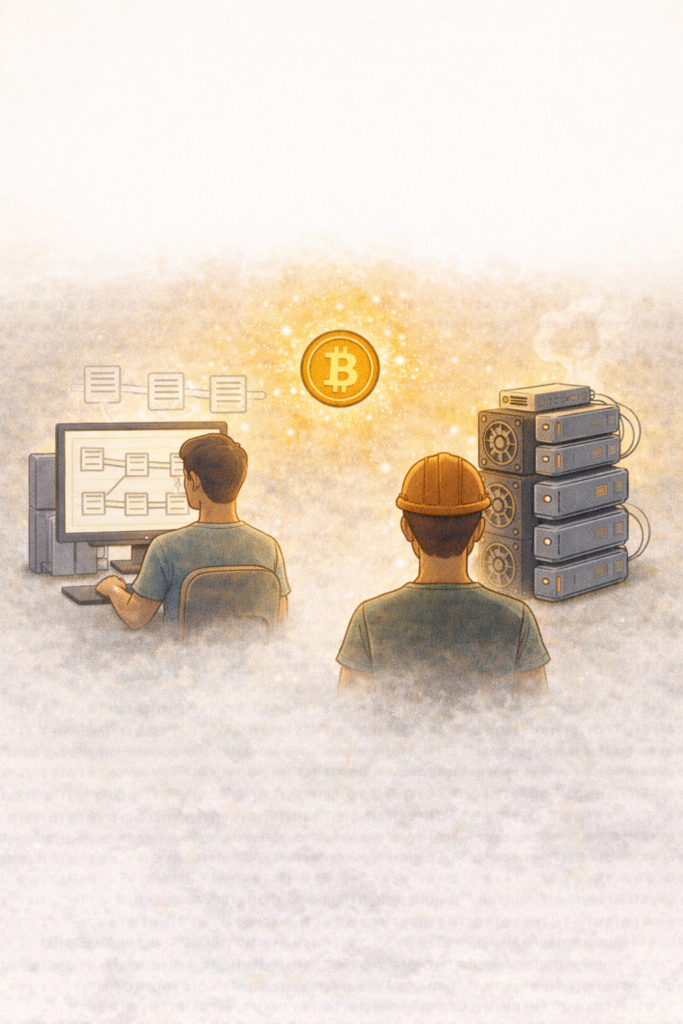
    The Bitcoin network runs because many independent people choose to follow the same rules. There is no central office. There is no single owner. Instead, different groups do different jobs.

    Users send payments. Nodes check rules. Miners build blocks. Developers write software. Exchanges and wallets help people use the system. None of these groups controls everything alone.

    Who keeps it running

    The Bitcoin network stays alive because people have reasons to participate. Miners want rewards. Node operators want to verify the system for themselves. Users want money they can send without asking a company first.

    These motives are not identical. However, they can still point in the same direction. Everyone benefits when the rules remain clear and trusted.

    Why incentives matter

    Bitcoin does not depend on everyone being kind. It uses incentives. Honest miners can earn rewards. Dishonest miners risk wasting money. Nodes can reject invalid blocks.

    That mix makes the Bitcoin network hard to control. Influence exists, but it is spread across many roles.

    What to read next

    Next, read Bitcoin decentralization explained. For a wider primer, see Bitcoin.org’s overview.
  • Day 3 — Who Verifies Bitcoin Transactions If There Is No Bank?

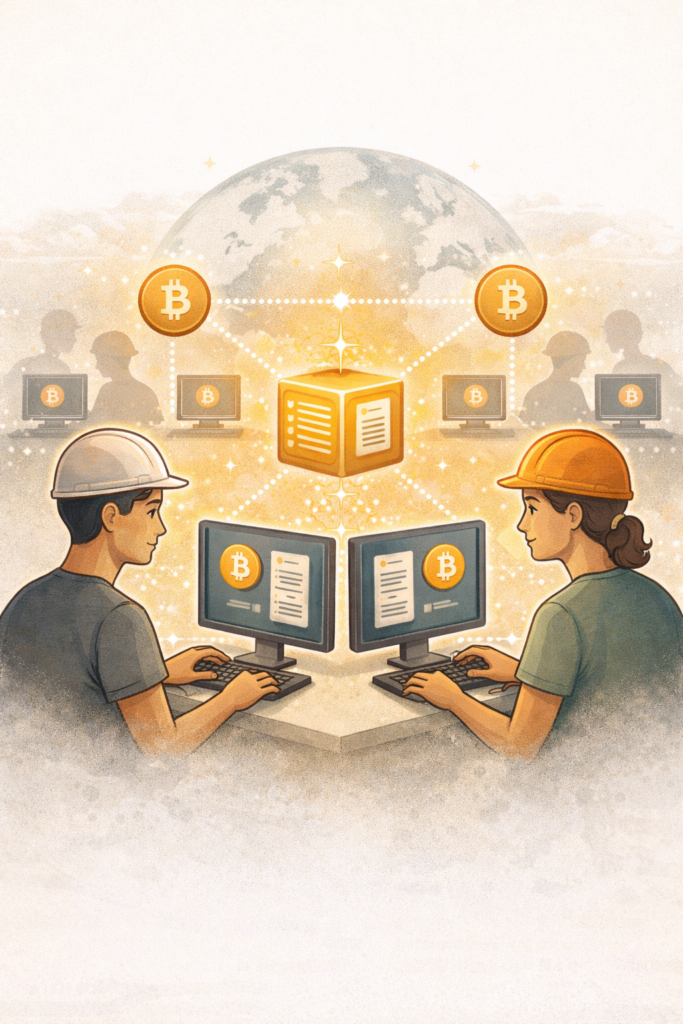
    Bitcoin transactions are verified by rules, not by a bank desk. A wallet creates a payment. The network checks whether that payment is valid. Then miners can place it in a block.

    This process may sound technical, but the idea is simple. Every node can check the same facts. That is how Bitcoin keeps trust public.

    Who checks the payment

    Nodes check Bitcoin transactions first. They ask simple questions. Is the signature valid? Do the coins exist? Were those coins already spent? Does the transaction follow the rules?

    If the answer is no, the node rejects the payment. If the answer is yes, the transaction can move forward.

    What miners do

    Miners collect valid Bitcoin transactions and build blocks. They do not get to invent coins or ignore the rules. Other nodes still check their work.

    So, miners organize the payments. Nodes verify the rules. Together, they help the system work without a bank in the middle.

    What to read next

    Next, read proof of work explained. For background, see Bitcoin.org’s guide.