Tag: blockchain security

  • Day 7 — If a Few People Control Mining, Is Bitcoin Still Decentralized?

    What decentralization really means

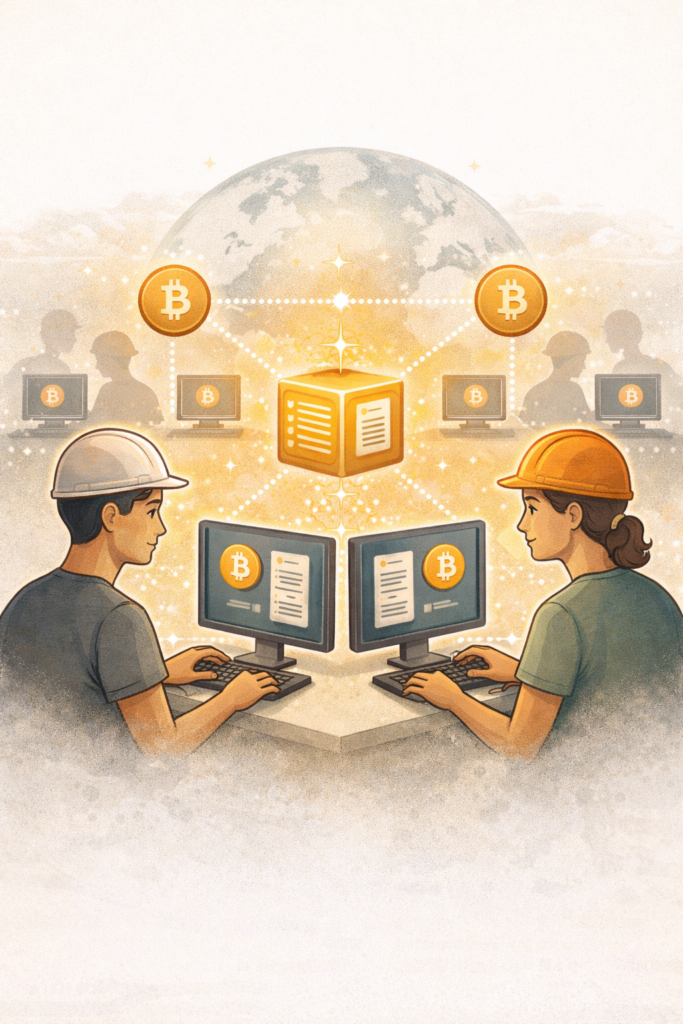
    Bitcoin decentralization is not controlled by one single group. Miners matter, but they are not the whole story.

    Bitcoin also depends on nodes, users, developers, wallets, exchanges, and businesses. Each group plays a different role.

    So the better question is not whether Bitcoin is decentralized. The better question is which part of Bitcoin we are discussing.

    Miners have power, but not all power

    Miners create candidate blocks. They choose which valid transactions to include. They also compete for rewards.

    However, miners cannot simply change Bitcoin’s rules by themselves. If they create invalid blocks, nodes can reject them.

    This creates an important balance. Miners provide security, but nodes enforce validity.

    Why mining pools raise concerns

    Mining is expensive. Because of that, many miners join pools to make rewards more predictable.

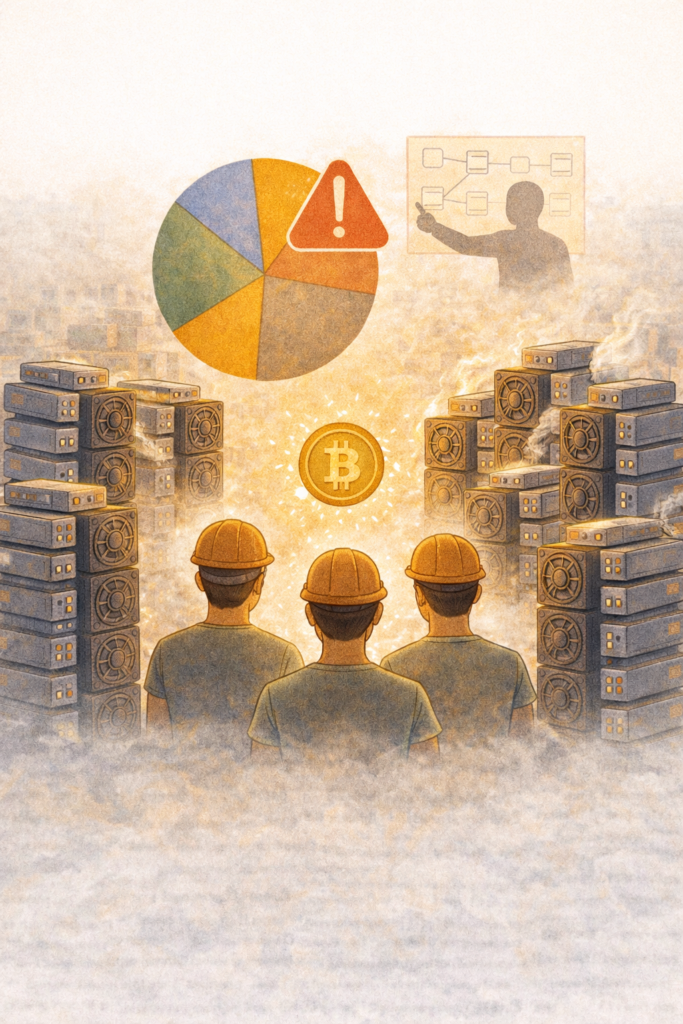
    That can create visible concentration. A few pools may appear to control a large share of the hash rate.

    Still, a pool is not the same as one miner. Individual miners can leave a pool if it behaves badly.

    What a 51 percent attack means

    If one group controls most mining power, it could try to reorder recent transactions. It might also attempt double spending.

    However, it could not create coins from nothing. It also could not steal coins without valid signatures.

    Therefore, the risk is serious, but it has limits.

    The takeaway

    Bitcoin decentralization is a moving balance. Mining power, node rules, user choice, and economic incentives all matter.

    That is why decentralization is not a simple label. It is a system that must keep resisting control over time.
  • Day 6 — Who Actually Runs Bitcoin — And Why Do They Do It?

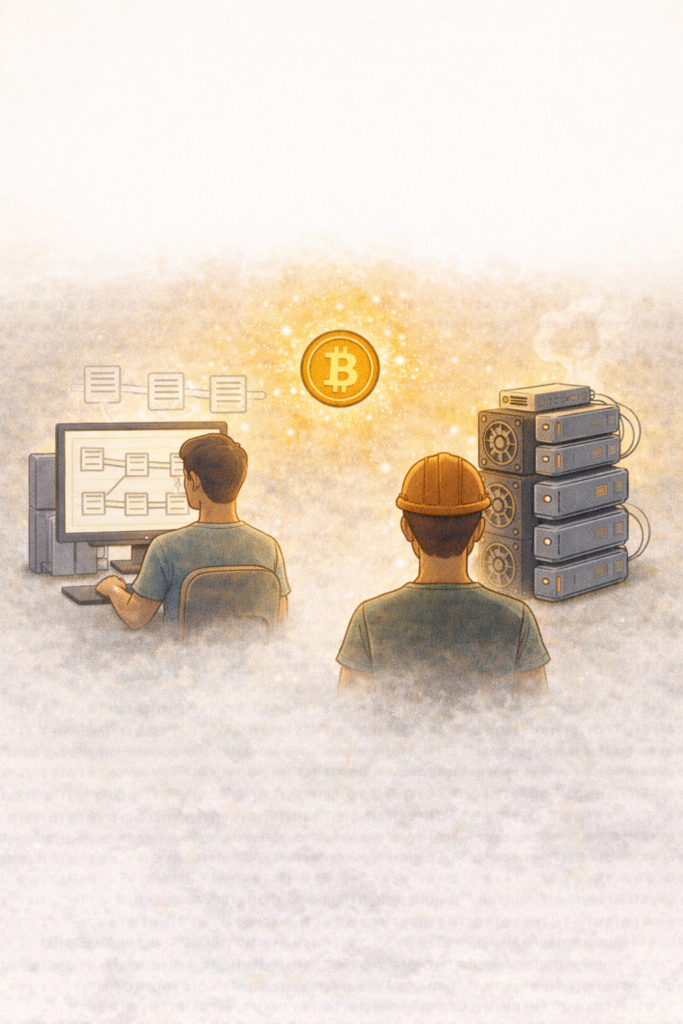
    The Bitcoin network runs because many independent people choose to follow the same rules. There is no central office. There is no single owner. Instead, different groups do different jobs.

    Users send payments. Nodes check rules. Miners build blocks. Developers write software. Exchanges and wallets help people use the system. None of these groups controls everything alone.

    Who keeps it running

    The Bitcoin network stays alive because people have reasons to participate. Miners want rewards. Node operators want to verify the system for themselves. Users want money they can send without asking a company first.

    These motives are not identical. However, they can still point in the same direction. Everyone benefits when the rules remain clear and trusted.

    Why incentives matter

    Bitcoin does not depend on everyone being kind. It uses incentives. Honest miners can earn rewards. Dishonest miners risk wasting money. Nodes can reject invalid blocks.

    That mix makes the Bitcoin network hard to control. Influence exists, but it is spread across many roles.

    What to read next

    Next, read Bitcoin decentralization explained. For a wider primer, see Bitcoin.org’s overview.

  • Day 4 — The Puzzle That Keeps Bitcoin Honest

    Why proof of work exists

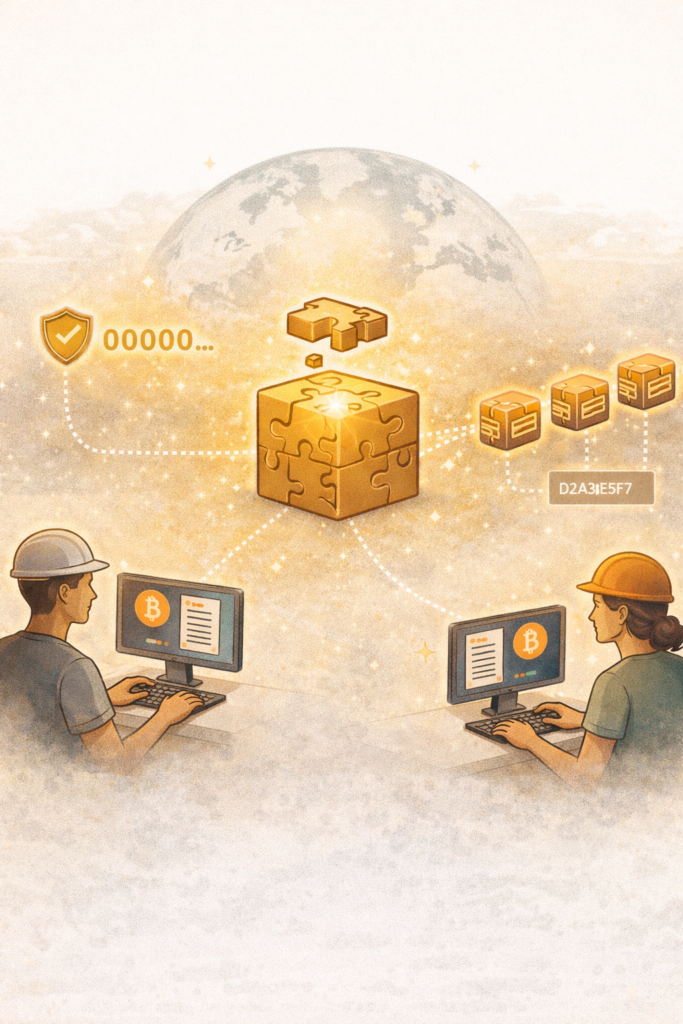
    Proof of work is the puzzle that helps keep Bitcoin honest. It makes new blocks expensive to create, but easy to check.

    This matters because Bitcoin has no central office. There is no manager who decides which transaction history is true.

    Instead, miners compete to build blocks. Nodes then check those blocks against the rules.

    The puzzle in simple words

    A miner gathers valid transactions into a candidate block. Then the miner changes a small value again and again.

    The goal is to find a block hash that meets Bitcoin’s difficulty target. Most attempts fail. Eventually, one attempt works.

    When a miner finds a valid answer, it shares the block with the network.

    Why checking is easier than mining

    Finding the answer takes huge effort. However, checking the answer is fast.

    This one-way difficulty is useful. A dishonest miner cannot cheaply rewrite history. At the same time, honest nodes can quickly reject bad blocks.

    So proof of work creates a cost around cheating. That cost protects the shared ledger.

    What proof of work does not do

    The puzzle does not magically decide truth. It works only because nodes enforce the rules.

    For example, a block can have a valid puzzle answer and still contain an invalid transaction. Nodes would reject it.

    Therefore, mining and validation are different jobs. Both are important.

    The takeaway

    Proof of work turns energy, hardware, and time into a security barrier. It rewards miners for honest work and makes attacks costly.

    That is why Bitcoin uses a puzzle. The puzzle is not decoration. It is part of the system’s defence.

  • Day 3 — Who Verifies Bitcoin Transactions If There Is No Bank?

    Bitcoin transactions are verified by rules, not by a bank desk. A wallet creates a payment. The network checks whether that payment is valid. Then miners can place it in a block.

    This process may sound technical, but the idea is simple. Every node can check the same facts. That is how Bitcoin keeps trust public.

    Who checks the payment

    Nodes check Bitcoin transactions first. They ask simple questions. Is the signature valid? Do the coins exist? Were those coins already spent? Does the transaction follow the rules?

    If the answer is no, the node rejects the payment. If the answer is yes, the transaction can move forward.

    What miners do

    Miners collect valid Bitcoin transactions and build blocks. They do not get to invent coins or ignore the rules. Other nodes still check their work.

    So, miners organize the payments. Nodes verify the rules. Together, they help the system work without a bank in the middle.

    What to read next

    Next, read proof of work explained. For background, see Bitcoin.org’s guide.