
Tag: defi lending

  • Day 22 — What Happens When a DeFi Loan Becomes Unsafe?

    Watercolor illustration of a DeFi loan health meter triggering collateral liquidation

    A DeFi loan begins with more collateral value than debt, but crypto prices can move quickly. If the collateral falls far enough, the protocol cannot wait for a human conversation or a monthly payment. Its smart contracts enforce a liquidation rule.

    Each market defines a threshold that determines how much borrowing a particular asset can support. Interfaces may summarise the buffer as a health factor. A comfortable value means the collateral can absorb some decline; a value near the limit means even a small price move may make the position eligible for liquidation.

    When the threshold is crossed, an independent liquidator can repay part of the borrower’s debt and receive some collateral, usually with a bonus. That reward motivates bots to act quickly. The protocol reduces risky debt, lenders remain better protected, and the borrower loses collateral plus a penalty.

    Consider ether collateral worth $1,500 against an $800 loan. If ether falls and the permitted borrowing limit drops below the debt, liquidation can begin. Adding collateral or repaying part of the loan before that point restores the safety margin. Watching only the original deposit price is not enough because the relevant values update continuously.

    Liquidation depends heavily on price oracles. A delayed or manipulated price can liquidate healthy users or leave the protocol with bad debt. Network congestion also matters: when many positions fail together, gas costs rise and liquidators may struggle to process them quickly.

    Borrowers can reduce risk by using less leverage, choosing strong collateral, maintaining a wide buffer, monitoring alerts, and understanding the exact threshold and penalty. There is no universal safe ratio because volatility, oracle design, and protocol rules differ.

    Liquidations show that attractive borrowing and lending rates come from a system of incentives and risk controls. Tomorrow we will ask the broader question behind every advertised return: where does crypto yield actually come from?
  • Day 21 — How Can DeFi Lend Money Without a Credit Score?

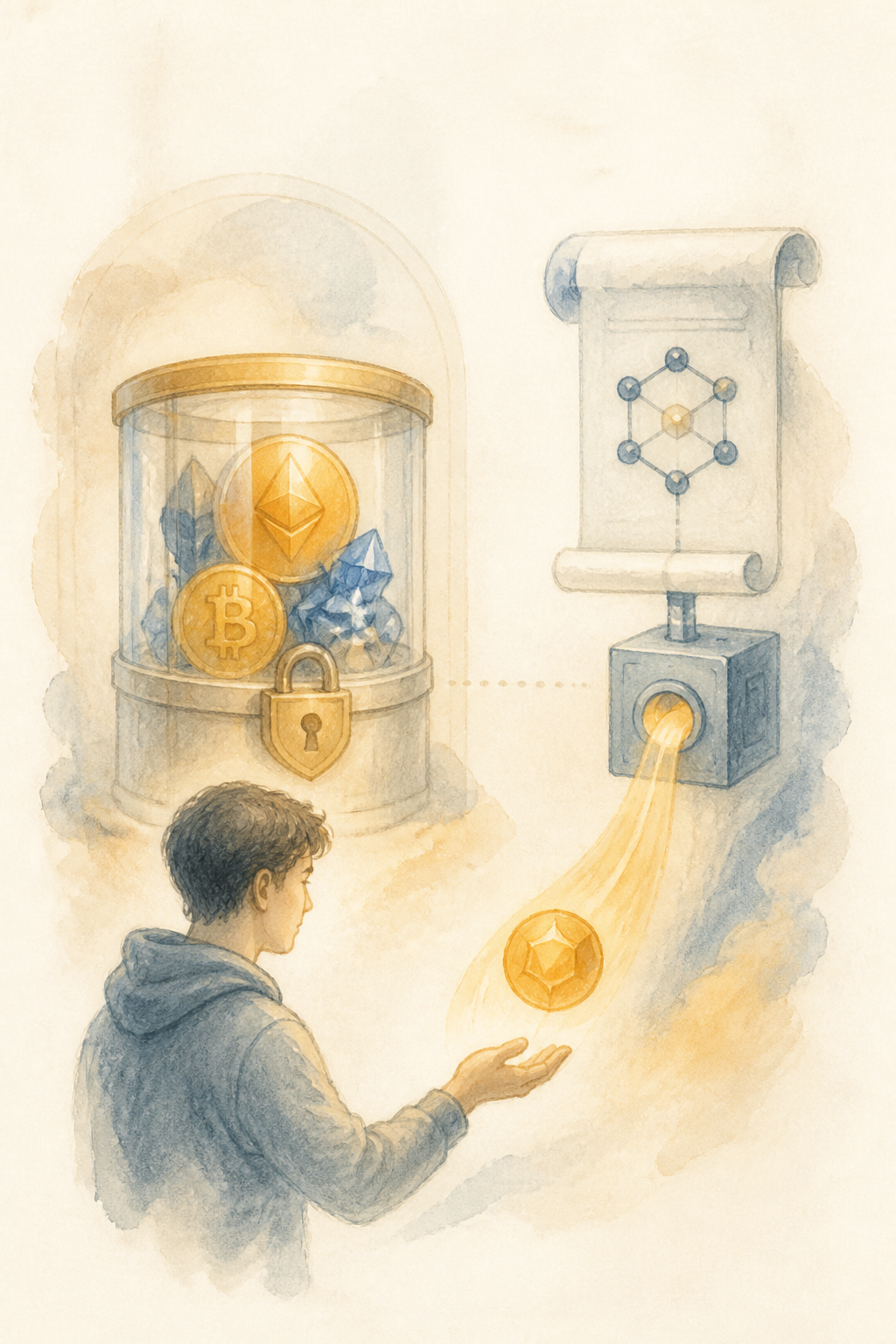
    Watercolor illustration of borrowers and lenders connected through an overcollateralized DeFi lending pool

    A bank can evaluate salary, identity, and repayment history before making a loan. A public blockchain usually does not know those facts. DeFi lending therefore relies on a different protection: borrowers commonly lock collateral worth more than the amount they borrow.

    Lenders deposit assets into a smart-contract pool. Borrowers draw from that shared pool after supplying acceptable collateral. The protocol records deposits, debts, interest, and collateral ratios on-chain, while its rules apply equally to any wallet that can submit a valid transaction.

    Imagine depositing ether worth $1,500 and borrowing $800 in stablecoins. You still benefit if ether rises, and you gain spendable stablecoins without selling it. But if ether falls, the safety margin shrinks. Borrowing the maximum allowed amount leaves very little room for market movement.

    Interest rates are often driven by utilisation. When most of a pool is available, borrowing can be cheap. As more assets are borrowed and liquidity becomes scarce, rates rise to encourage repayment and attract new deposits. The exact curve is code defined by each protocol.

    This system makes loans fast and transparent, but it is not unsecured credit. Overcollateralisation protects lenders precisely because the protocol cannot chase an anonymous borrower later. It also means borrowers already need valuable assets, so DeFi lending does not solve every financial access problem.

    Depositors face risks too: smart-contract bugs, bad collateral, oracle failures, governance changes, and periods when withdrawals are constrained because too much of the pool is borrowed. A displayed supply rate can change rapidly and is not the same as a guaranteed bank deposit.

    If collateral can fall below the safe level, the protocol needs a way to act before the loan becomes undercollateralised. Tomorrow we will examine liquidation—the automatic process that protects the pool but can be painful for borrowers.