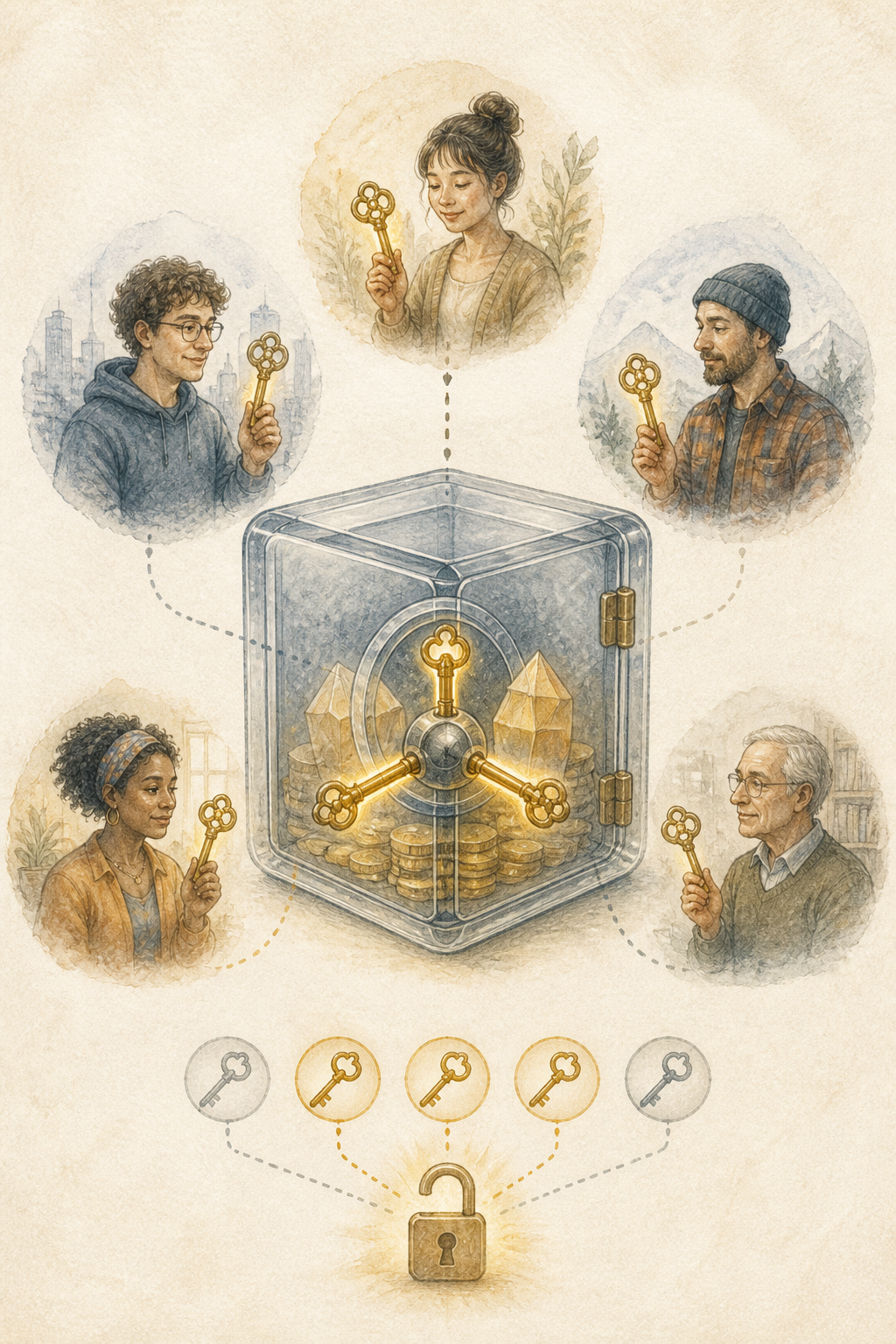
A normal crypto wallet may be controlled by one private key. That is wonderfully simple until the key is lost, stolen, or held by one person who should not have unlimited power. A multisignature wallet replaces that single point of failure with a shared approval rule.
A multisig can be configured as two-of-three, three-of-five, or another threshold. In a two-of-three wallet, any two authorised signers must approve a transaction before it executes. One lost key does not freeze the funds, and one compromised signer cannot move them alone.
This structure is useful for company treasuries, DAOs, investment groups, and even families. Different people or hardware wallets can hold the signer keys. A payment can be proposed, reviewed by others, and executed only after enough independent approvals are recorded.
Multisig does not remove trust; it distributes it. If enough signers collude, they can still take the funds. If too many keys are lost, the required threshold cannot be reached. Signers may also approve a malicious transaction without understanding it, so clear operating procedures matter as much as the contract.
Good setups separate keys across devices and locations, document how signers verify destinations, test recovery with small amounts, and plan how signers can be replaced. The threshold should balance security with the practical ability to act during an emergency. Five approvals may sound safer until two people are unreachable.
Over these first twenty-five days, we moved from the basic problem of digital trust to blocks, mining, consensus, Ethereum, smart contracts, wallets, tokens, DeFi, and community governance. Multisig ties many of those ideas together: cryptographic signatures, programmable rules, transparent execution, and human coordination.
The larger lesson is that blockchain does not make trust disappear. It lets us define who must agree, what rules they must follow, and which evidence everyone can verify. That is a strong foundation for the next stage of learning, where we can examine upgrades, scaling, bridges, privacy, and the harder trade-offs behind real systems.